Why Sleep Is a Skincare Conversation
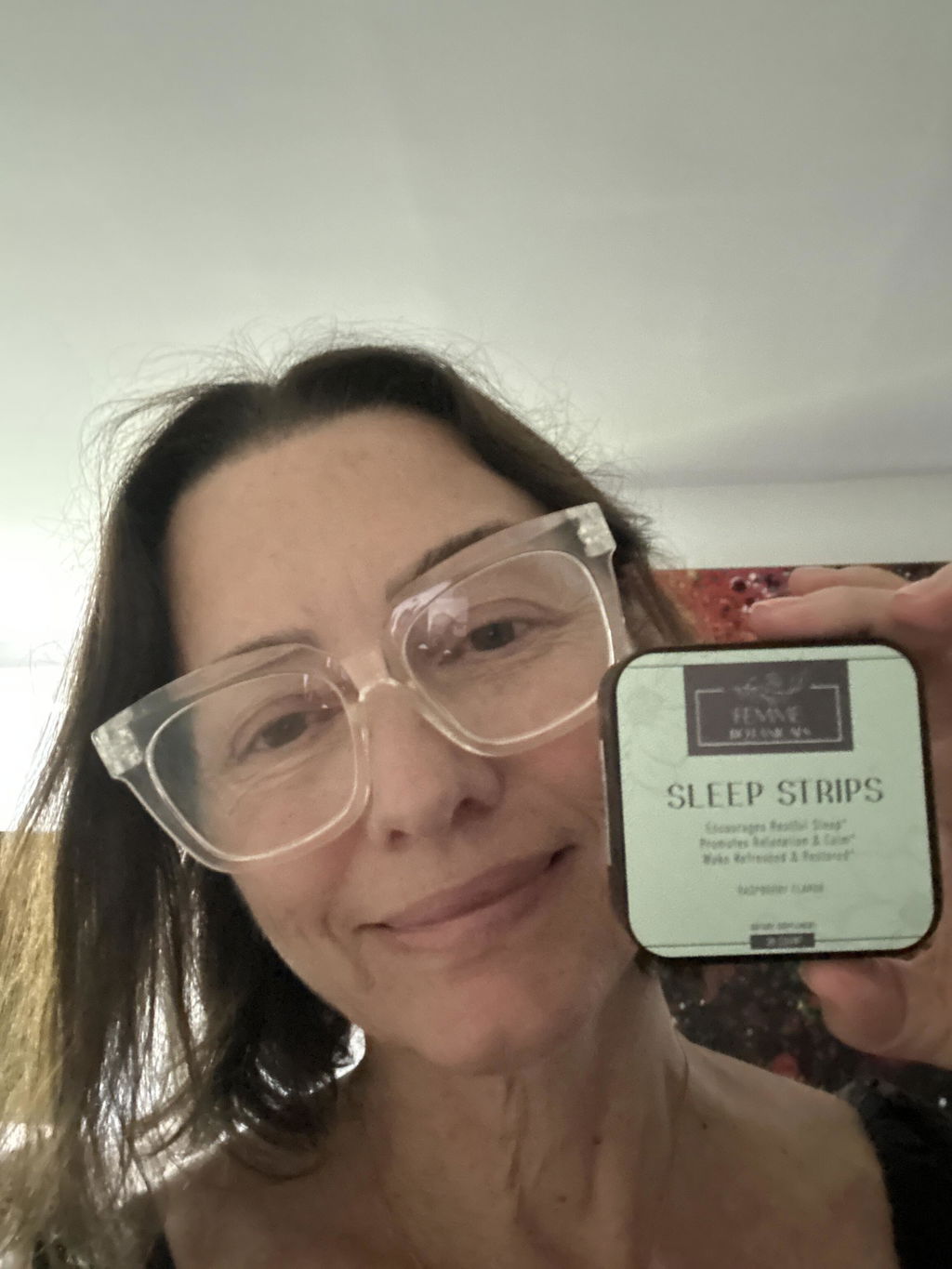
A dissolvable nightly strip with melatonin, valerian, lavender, chamomile, and hibiscus — designed to absorb faster than a capsule and support the kind of deep, uninterrupted sleep mature skin depends on for overnight recovery.
Skin does most of its repair work overnight. Cell turnover accelerates, barrier function rebuilds, and the inflammatory load of the day quiets down. None of that happens efficiently on five fragmented hours of sleep.
For women in their sixties, the math gets harder. Sleep architecture changes with age. Falling asleep takes longer, waking through the night becomes more common, and the deep stages of sleep — the ones the body uses most for repair — shorten naturally. The skincare conversation rarely acknowledges this. We think it should.
Sleep Strips don't act on skin. They support sleep itself — and sleep is what allows your skin to do what it already knows how to do.
Format & Delivery
Pullulan-based dissolvable strip — melts on the tongue in seconds. No water, no capsules, no pill to swallow before bed.
Sleep aids come in four common formats, and they aren't equivalent.
Capsules and gummies are swallowed, dissolved in the stomach, and processed by the liver before the active ingredients reach circulation. That delay matters when you're trying to fall asleep — and a meaningful portion of each ingredient is lost in the process.
Patches absorb through the skin, which is a slower route designed for sustained, low-dose delivery over many hours. That format works well for applications like hormone replacement or nicotine cessation. It is not well-matched to sleep onset, where the goal is to feel the effect quickly.
Dissolvable strips absorb through the tissue under the tongue and inside the cheek — a thin, highly vascularized layer that connects directly to circulation. No digestive delay, no transdermal lag, no capsule to dissolve. The format is the formulation.